
Commercial relocation: offices, retail, warehouse, healthcare, laboratory and education premises. Method is constant; the binding constraint changes with the premises type.
Continuum Green relocates commercial premises of every kind across the UK: offices, retail units, warehouses, clinics, laboratories and education sites. Surveyed, sequenced and delivered around your trading hours. Manchester-based, working nationwide.
Commercial relocation covers any move of a business premises, and the differences between premises types matter more than most suppliers admit. An office move is a scheduling problem. A retail move is a trading problem. A warehouse move is a stock problem.
What stays constant is the method: survey first, build the programme backwards from the date you have to be operational, agree who owns each dependency, and document what moved and where it went.
What changes is the constraint. Offices are limited by staff downtime, retail by trading hours and stock security, warehouses by racking and inventory accuracy, healthcare and laboratories by regulated equipment and clinical continuity.
Getting that constraint right at survey is what separates a move that works from one delivered competently against the wrong plan.
Different premises fail in different ways. This is what actually changes, and where the detail sits.
| Premises type | The binding constraint | Detail |
|---|---|---|
| Offices | Staff downtime. Everything is sequenced so people can work on Monday. | Office relocation |
| Technology and server rooms | Dependency order. Nothing is testable until the network is live. | IT relocation and data centre relocation |
| Retail and showrooms | Trading hours and stock security. Closed days are lost revenue, so work happens overnight. | Scoped at survey |
| Warehouses and storage | Inventory accuracy and racking. Stock that cannot be located has effectively been lost. | Commercial storage |
| Healthcare premises | Clinical continuity and patient records. Services do not stop for a move. | Hospital relocation |
| Laboratories | Manufacturer commissioning and cold chain. Much of it is not a mover’s work at all. | Laboratory relocation |
| Schools and colleges | The academic calendar. A fixed deadline that cannot move. | School removals |
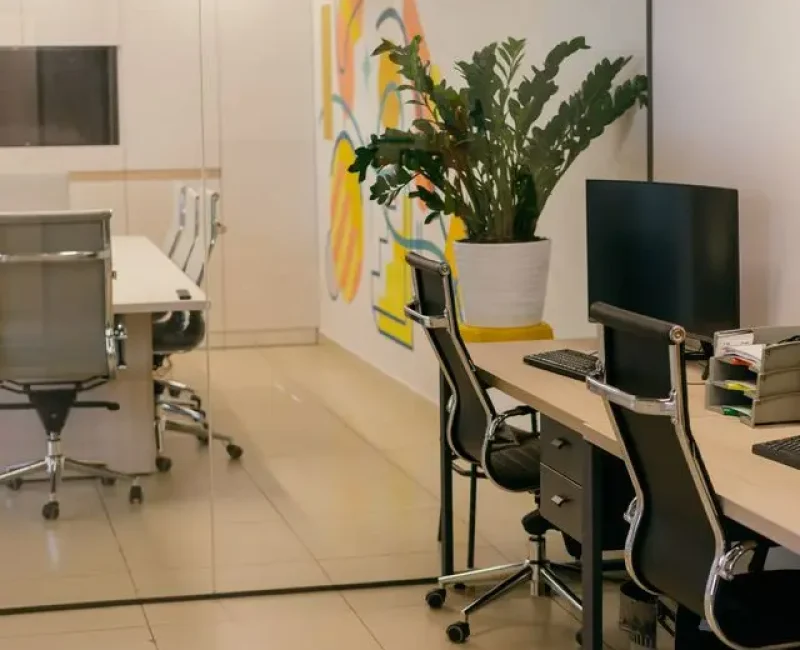
Commercial moves rarely fail on the lifting. They fail in the gaps between the landlord, the fit-out contractor, the IT team, the connectivity provider and the mover, where each assumed another had it.
We run the survey, build the programme, submit documentation to both building managers, and hold the sequence together across everyone involved. One named person from brief to sign-off, on site during the move itself rather than reachable by phone.
Whatever the premises, the same six things decide whether the move holds together. They are worth confirming in writing before a date is committed.
| Requirement | Why it decides the outcome |
|---|---|
| A survey, not an estimate | Volume assessed from a floor plan is consistently wrong. Storage areas and back-of-house are where the surprises live. |
| A confirmed handover date | The destination not being ready is the commonest cause of slippage, and no amount of crew compensates for it. |
| Access agreed at both ends | Lift bookings, loading bays, out-of-hours permission, parking suspensions. All knowable weeks ahead, all capable of stopping a move on the day. |
| Documentation submitted early | Method statements, risk assessments and insurance certificates. Building managers routinely refuse entry without them. |
| Insurance on a declared value | Cover calculated by weight bears no relation to what commercial contents are worth. |
| A named owner on each side | Multi-supplier moves fail at the joins. Someone has to hold all of them. |
Every commercial move produces surplus: furniture that will not fit the new layout, equipment past its useful life, and stock or records nobody has reviewed in years.
It is assessed before the vehicles are booked rather than after. Serviceable items are redeployed to your other sites, resold or donated. Data-bearing equipment goes through certified destruction. What remains is segregated and routed to permitted facilities, and you receive documentation for both streams.

The hardest commercial moves are the ones where the business cannot pause. A retail unit that closes for three days has lost three days of revenue that never returns, and a warehouse that cannot pick has customers waiting.
These run overnight or in phases, and the planning question is not how fast the move can happen but which functions have to stay live throughout and what it costs to keep them that way.
Stock adds a second problem. Inventory accuracy degrades every time stock is handled, and a move handles all of it at once. Counting before and after, and moving in a sequence that preserves location logic, is what stops a move becoming a stocktake.
Security matters more in retail than in offices. High-value stock in transit and in a part-fitted unit overnight needs a plan, not an assumption, and it should be agreed with your insurer rather than with your mover alone.
One practical step that costs nothing: tell your insurer the move dates before they arrive. Cover for stock and equipment is frequently tied to a stated address, and goods sitting overnight in a part-fitted unit or in transit between two premises can fall outside it. A short conversation weeks ahead is considerably cheaper than discovering the gap after a claim.
Surveyed, sequenced and documented, whatever the premises type and whatever has to keep trading through it.
A programme built backwards from the date you have to be operational, with dependencies named and owners agreed. See move planning for how the sequence is built.
Workstations, storage, seating, retail fixtures and shelving dismantled, transported and rebuilt at named positions to your floor plan.
Port-mapped disconnection, protected transport and rebuild to recorded configuration, sequenced with your IT team. Detail on IT relocation.
Records moved in sequence with chain of custody, and certified destruction with certification for anything retired. See document storage.
Surplus assessed for redeployment, resale or donation ahead of disposal, with waste documentation by stream. See clearance.
Reinstatement to the floor plan, a walk round with you at completion, and support on the first working day. See furniture installation.
Moving several premises is not the same job repeated. It is one programme with a learning curve, and organisations that treat it as a series of unrelated moves pay for the same mistakes more than once.
The first site is always the slowest and most expensive. It is where the survey method gets calibrated, the labelling convention is settled, the documentation pack is built, and the assumptions about access get corrected. Everything after that should be measurably cheaper, and if it is not, something is wrong with how the programme is being run rather than with the sites.
Two decisions make the difference. The first is whether layouts and furniture standards are consistent across sites, because consistency is what makes stock interchangeable and turns surplus at one location into supply for another. See redeployment for how that works in practice.
The second is where decisions sit. Programmes run centrally move faster and cost less; programmes where each site negotiates its own arrangements produce inconsistent standards, duplicated surveys, and no ability to move stock between locations. That is an organisational choice rather than a logistical one, and it is worth settling before the first site moves rather than after the third.
We move commercial premises. Several adjacent trades are not ours, and mixing them up costs time.
We do not carry out fit-out, partitioning, flooring, decoration, or mechanical and electrical works, and we do not act as principal contractor for construction. We move and reinstate what exists.
We do not move industrial machinery, production lines, or plant requiring lifting operations. That needs certified riggers and lift plans, and it is a genuinely different discipline.
We also do not handle chemicals, pharmaceuticals, clinical waste, or anything requiring carriage of dangerous goods licensing. Where those form part of your move, they are sequenced around specialist carriers.
Questions we are asked most often at the start of a commercial move.
Any move of business premises: offices, retail units, warehouses, clinics, laboratories, education sites. The method is consistent; the binding constraint changes with the premises type.
Usually, through overnight or phased working. It costs more than a single closure and for retail and warehousing it is almost always the cheaper option overall, because lost trading rarely comes back.
Survey as soon as the destination is confirmed. The move needs weeks; connectivity provisioning and landlord handover need months and set the real timeline.
Yes. We are based in Manchester and work nationwide. Moves outside the UK are arranged with overseas partners who execute in country.
It is assessed for redeployment, resale or donation before disposal, and you receive documentation for both the reuse and the waste streams.
Speak to our commercial relocation team. We will survey the site, build a programme around what has to keep running, and tell you plainly which parts are ours and which are not.
Every move starts with a survey. Book yours.
Book A Survey