
Library and archive relocation: collections measured in linear metres, mapped bay to bay, moved in classification sequence. Shelving dismantled and reinstalled; fill ratio planned for growth.
Continuum Green relocates library and archive collections across the UK. Stock is measured, mapped bay to bay, moved in sequence, and reshelved in classification order, with shelving dismantled and reinstalled to match.
A library move is a mapping exercise with a transport component attached. The books are not the difficult part. The difficulty is that a collection only works if it is in order, and order is a property of the whole run rather than of any individual item.
Get one bay out of sequence and the catalogue stops matching the shelves. Recovering from that costs more than the move did, because reshelving an unsequenced collection means handling every volume a second time.
We work from your classification scheme, whether Dewey, Library of Congress, or a local system, and map origin bay to destination bay before anything is packed. Trolleys and crates are loaded and labelled so the unload order reproduces the shelf order rather than reversing it.
Shelving is surveyed, dismantled, and reinstalled as part of the same project, because a collection cannot be reshelved into racking that has not been built and levelled.
Libraries are not quoted in boxes or cubic metres. The planning unit is the linear metre of occupied shelving, and every other figure derives from it.
| Measure | What it is | What it governs |
|---|---|---|
| Linear metres occupied | Total running length of shelved material across the collection. | Crew size, vehicle loads, and the duration of the whole project. |
| Linear metres available | Running length of usable shelving at the destination once built. | Whether the collection physically fits, and how much can be interfiled afterwards. |
| Bay and shelf count | Number of bays, and shelves per bay, at both ends. | The mapping. Origin bay 14 becomes destination bay 9, recorded before packing. |
| Fill ratio | Proportion of each shelf actually occupied after the move. | Whether the library can accept new acquisitions without reshifting the run. |
| Weight per bay | Loaded weight, particularly for mobile and roller racking. | Floor loading limits at the destination, which are checked before installation. |
Ask any prospective supplier how they will measure the collection. If the answer is in boxes, they have quoted a house move.
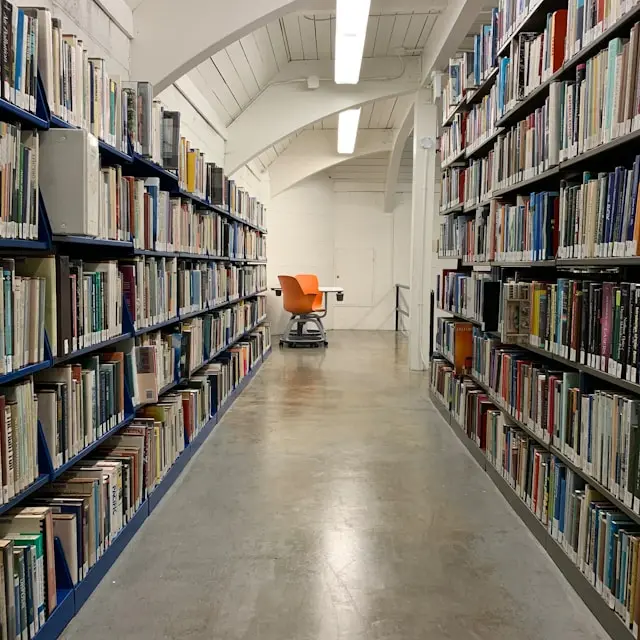
Standard removal techniques are not appropriate for archive and library environments. Continuum Green deploys specialist handling protocols developed specifically for fragile, rare, and irreplaceable materials including bound volumes, loose manuscripts, oversized maps, photographic collections, and sensitive physical records.
We use custom shelving trolleys, acid-free packing materials, and Protected Transport & Handling to protect your collection from physical damage, environmental exposure, and sequence disruption at every stage of the move. Every item is tracked from its origin shelf position to its confirmed destination location.
The most expensive mistake in library relocation is not damage. It is filling the new shelving completely.
Working shelving is loaded to roughly two thirds to three quarters of capacity. That headroom is what allows a new acquisition to be interfiled at its correct classification point without shifting every volume after it. A collection moved into shelving at full capacity is technically complete and operationally finished, because the first new book cannot be added.
The failure happens because the destination shelving is measured against the collection rather than against the collection plus its growth. The numbers reconcile, everything fits, and the problem surfaces months later when acquisitions resume.
The fix is arithmetic done before the shelving is ordered. Decide the target fill ratio with your librarians, calculate the linear metres required at that ratio rather than at full capacity, and confirm the destination provides them. Where it does not, the decision to weed the collection or add shelving has to be made before the move rather than discovered after it.
Responsible Decommissioning for Displaced Collection Items
Archive and library relocations frequently surface materials that are no longer required, duplicate holdings that have outlived their purpose, or physical items that the receiving space simply cannot accommodate. Continuum Green manages the responsible decommissioning of displaced collection items as a fully integrated part of your relocation programme.
Redundant materials are assessed for donation to educational institutions, community libraries, heritage organisations, and charitable archives before any disposal decision is made. Items carrying historical or cultural significance are flagged for specialist review. Nothing of potential value to another institution is discarded without first exploring its rehoming options.

Shelving is frequently treated as an afterthought and is usually the item that delays reopening.
Static steel shelving dismantles and reinstalls straightforwardly, provided bays are labelled and sequenced so they return in the same order. Wooden and heritage shelving is slower and more fragile, and in listed buildings may be a fixture requiring consent rather than something to be unbolted.
Mobile and roller racking is a different proposition. It runs on floor-mounted rails that must be laid level and true, and a system installed on an out-of-tolerance floor binds or fails to track. Loaded weight also concentrates heavily, so floor loading capacity at the destination is confirmed before anything is installed rather than after.
Reinstallation is on the critical path. The collection cannot be reshelved until the racking is built, levelled, and signed off, so the shelving programme drives the move dates rather than the other way round.
End-to-end archive and library relocation services built around collection integrity, sequence preservation, and the absolute protection of irreplaceable materials.
Detailed pre-move assessment of your entire collection in collaboration with your archivists and records managers, establishing a precise sequence map that governs every stage of packing, transport, and reinstallation.
Custom packing of bound volumes, loose documents, photographic materials, oversized items, and fragile holdings using acid-free, archival-grade materials and purpose-built transit solutions.
Professional deinstallation, transport, and reinstallation of mobile shelving systems, static racking, and specialist library furniture configured exactly to your new space layout and collection requirements.
Fully tracked, protected transport with load sequencing managed to preserve your collection’s cataloguing order from point of departure through to confirmed arrival and shelf placement.
Responsible assessment and rehoming of collection items that cannot be accommodated in your new location, through verified donation pathways to educational, heritage, and community organisations.
Systematic reinstatement of your collection to its confirmed sequence plan, followed by a full accessibility verification walkthrough with your archivists before project handover and sign-off.
General stock and special collections travel differently, and the distinction should be agreed with your archivist at survey rather than assumed by a crew on the day.
| Material | Handling |
|---|---|
| General bound volumes | Trolleyed or crated spine-down with the block supported. Over-packing distorts bindings, and under-packing lets volumes shift and rub in transit. |
| Rare and antiquarian books | Individually wrapped and boxed. No elastic bands or adhesive tape at any point, and fragile bindings travel flat rather than upright. |
| Loose manuscripts and papers | Moved in their existing folders and boxes. Contents are never re-sorted in transit, because the arrangement is itself the archival record. |
| Maps, plans and oversized sheets | Transported flat in plan chests, or rolled on tubes of adequate diameter. Never folded, and never rolled tightly. |
| Photographic material | Sensitive to temperature and humidity swings. Time spent in vehicles is minimised and loads are scheduled rather than left standing. |
| Parchment and vellum | Reacts quickly to humidity change and can cockle. Allowed to acclimatise on arrival before reshelving rather than being placed immediately. |
| Microform and magnetic media | Kept away from heat sources, and magnetic media away from anything generating a field. Both degrade silently rather than visibly. |
The risk institutions consistently underestimate is environmental rather than physical. Material held for decades in a stable reading room is loaded into a vehicle, driven across the country, and unloaded into a building that has just been commissioned and is still drying out. Those humidity swings do more cumulative damage to paper, parchment and photographic emulsion than careful handling ever prevents, which is why acclimatisation time on arrival belongs in the programme.
BS 4971 is the current British Standard covering the conservation and care of archive and library collections, and it is the reference point most institutions will expect a relocation supplier to be working to. We plan around its principles; conservation treatment itself remains a conservator’s work.
The most common failure in institutional library moves is starting too late. A single-room archive of a few hundred linear metres needs six months of lead time as a realistic minimum. A university library, a multi-site records store, or a national institution with mixed media collections more commonly needs twelve to eighteen months, and the most complex institutional moves can require two years of preparation before a single item is packed.
What consumes that time is not the move. It is everything that has to be settled before packing can safely begin.
| Stage | Roughly when | What has to be settled |
|---|---|---|
| Governance and stakeholders | Months 1–3 | Identify everyone with a stake in the collection: archivists, records managers, IT for hybrid collections, estates, legal, compliance, senior leadership. Form a steering group with real decision-making authority and name a project lead who has both collection knowledge and operational authority. |
| Collection audit and cataloguing review | Months 3–6 | A physical audit rather than a box count: cataloguing currency, condition, sequence integrity. Are finding aids current? Is anything uncatalogued? Does anything need conservation attention before it can safely move? This is also where you identify what will not fit the new space, which carries its own compliance implications. |
| Destination planning and shelving design | Months 6–9 | Shelving capacity, environmental controls, floor loading, access routes and security confirmed. The destination sequence plan is finalised here, because the packing order at the origin depends on it. |
Note the dependency in the last row. Packing sequence is derived from the destination plan, so a shelving design still in flux stops the move before it starts.
The regulatory position for library and archive moves is more substantial than most planning guides suggest, and unfamiliarity with it is not a defence.
BS 4971:2017 is the primary UK standard for the conservation and care of archive and library collections. Published in 2017, it superseded both BS 4971:2002 and PD 5454:2012, consolidating environmental control, storage, exhibition and conservation policy into one framework.
For a relocation it bears directly on four things: the environmental parameters the receiving space must meet before the collection arrives, packaging and handling standards by material type, transport conditions, and risk assessment for the move itself, including identifying items needing conservation attention beforehand.
Compliance with BS 4971 is not legally mandated for every institution, but it is the benchmark professional practice is measured against. Any contractor claiming specialist archive capability should at minimum know what it is.
The Public Records Act 1958 applies to government departments, NHS organisations, local authorities and courts, placing obligations on the safe-keeping, selection and transfer of public records. The National Archives publishes detailed guidance on retention, appraisal and transfer. Where a move involves public records, those obligations continue throughout it, and decisions about material that will not fit the new space are governed by them rather than by convenience.
A general commercial mover and a specialist library mover are not different by degree. They are different in kind, and procurement processes rarely test for it.
These six questions separate them quickly. The distinction is not whether a supplier answers confidently, but whether the answer contains a method.
| Ask | A specialist answers | A generalist answers |
|---|---|---|
| How do you maintain sequence integrity across a large collection? | Describes a method: position-referenced labelling, bay-to-bay mapping, continuous reconciliation. | Describes careful packing and good labelling. Not the same thing. |
| What training do operatives get for fragile archival material? | Names specific archival handling training and the material types they have handled. | Refers to general manual handling. |
| How are environmental conditions managed in transit? | Gives vehicle specifications, monitoring, and protocols that differ by material type. | Says the vehicles are clean and well maintained. |
| What chain of custody documentation is provided? | Item or box-level tracking, handover documentation, reconciliation reporting. | A delivery note. |
| Have you worked to BS 4971 or equivalent? | Knows what it is and where it applies. | May not recognise it. |
| Can you provide comparable references? | References from universities, trusts, authorities or legal firms with similar collections. | References from office moves. |
Worth checking alongside those answers: British Association of Removers membership, health and safety pre-qualification such as CHAS, Constructionline or SafeContractor, and ISO 9001 quality certification. Ask any supplier which of these they actually hold and verify it with the issuing body rather than accepting a logo on a website. That includes us: ask directly and you will get a straight answer rather than an implication.
A library move does not end when the last crate arrives. The phase that determines whether it succeeded starts at that point.
Before the collection is declared open, someone has to verify systematically that items are shelved in the sequence the move plan specified, that finding aids and catalogue records reflect the new shelf locations, that retrieval systems and reading room facilities are operational, and that environmental conditions in the new space are within parameters.
That verification belongs to the archivist or librarian responsible for the collection, not to the contractor. We can confirm items were delivered to specified locations. Only the collection’s custodian can confirm the collection is accessible and functional.
Every move surfaces discrepancies: items that were in the wrong place beforehand, catalogue records already out of date, material found during packing that never appeared in the finding aid. The post-move window is when those get resolved, and a reconciliation report recording deviations from the plan, items needing special handling, and issues identified in transit is the basis for that review.
One opportunity worth taking. If a cataloguing project was already on the horizon, a relocation is the cheapest moment to do it, because the collection is being handled item by item regardless. Staff orientation matters too: a new space frequently means a different layout, different retrieval arrangements and different access controls, and the people who use it daily should be walked through it before it opens to readers.
We move collections. Several adjacent disciplines are not ours.
We do not carry out conservation treatment, repair, or stabilisation of damaged material. Where items need conservation attention, that is a conservator’s work and should happen before or after the move rather than during it.
We do not digitise collections, and we do not make cataloguing or deaccessioning decisions. Weeding a collection ahead of a move reduces cost considerably, but what leaves is your librarians’ judgement, not ours.
Material withdrawn during a move is handled through our clearance and reuse routes. For records held against retention periods rather than shelved as a collection, see document storage.
Questions we are asked most often by librarians and archivists.
In linear metres of occupied shelving, not boxes. Everything else, crew size, vehicle loads, and duration, derives from that figure. A quote based on box counts suggests the supplier has not moved a library before.
Yes. Origin bays are mapped to destination bays before packing, and trolleys and crates are loaded and labelled so unloading reproduces shelf order rather than reversing it.
Around two thirds to three quarters. Filling shelving completely means no new acquisition can be interfiled without shifting the whole run, which is the commonest and most expensive planning error in library moves.
Yes, though it needs more planning than static shelving. Rails have to be laid level and true or the system binds, and floor loading capacity at the destination is confirmed before installation.
If you have the time, yes. Every linear metre not moved is cost avoided twice, once in transport and once in the shelving needed to receive it. The decision on what goes is yours.
Speak directly with our archive and library relocation specialists today. We will assess your collection, build a sequence-preserving move plan, and deliver your holdings to their new home with every item accounted for, every shelf in order, and every irreplaceable piece fully protected.
Every move starts with a survey. Book yours.
Book A Survey