
Laboratory relocation: lab furniture, general equipment and cold storage moved to a documented sequence, coordinated around the specialists who handle chemicals, samples and calibrated instruments.
Continuum Green relocates laboratory environments across the UK. Benching contents, general equipment, cold storage units, furniture, and office areas are moved to a documented sequence, coordinated around the specialist handling that samples, chemicals, and calibrated instruments require.
Laboratory relocation is a coordination exercise between several parties, only one of which is a removals contractor. The physical move is straightforward. What is difficult is that a laboratory contains four distinct categories of material, each governed by different rules and each handled by different people.
There is general equipment and furniture, which is our work. There are calibrated or warrantied instruments, which manufacturers commission. There are chemicals and hazardous substances, which move under carriage regulations with licensed carriers. And there are samples and biological material, where the science rather than the logistics dictates everything.
Projects go wrong when a single supplier is assumed to cover all four. We map the categories at survey, name who owns each, and sequence our work around the specialists rather than in competition with them.
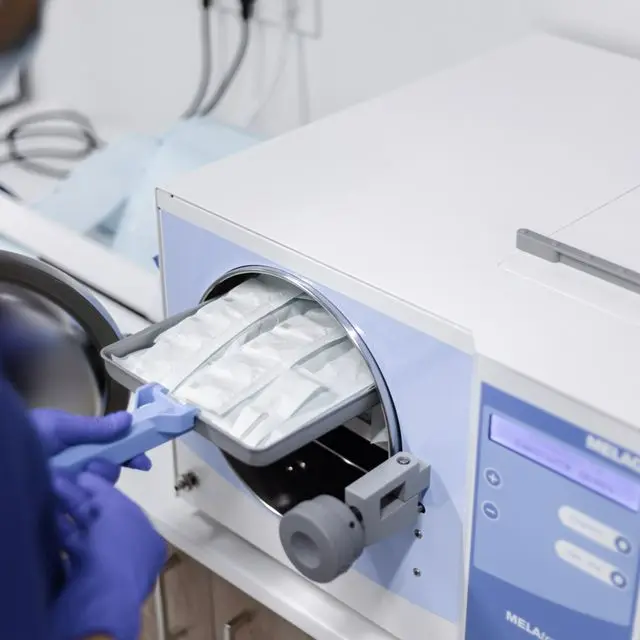
The other constant is decontamination. Equipment that has been in service must be decontaminated and certified clean before anyone handles it for transport. That is your laboratory’s responsibility, it takes time, and it needs to be in the programme rather than discovered on move day.
Establishing the boundaries early is the single most useful thing you can do on a lab move. This is how the categories usually divide.
| Category | Who handles it | What governs it |
|---|---|---|
| Lab furniture, benching contents, glassware, consumables, storage | Relocation contractor. Our scope. | Standard handling, with decontamination certified before we touch anything. |
| Office, admin and write-up areas | Relocation contractor. | As any commercial move. |
| Calibrated and warrantied instruments | Original equipment manufacturer or service engineer. | Moving these without the manufacturer typically voids warranty and invalidates calibration, requiring requalification afterwards. |
| Chemicals, reagents, hazardous substances | Licensed carrier, with your lab managing COSHH assessment. | Carriage of dangerous goods is a separately regulated activity with its own licensing. |
| Biological samples and specimens | Specialist cold chain or clinical courier. | Temperature integrity and chain of custody, not transport capacity, are the constraint. |
| Fume cupboards, services, fixed benching | Mechanical and electrical contractor. | Fixed installations requiring disconnection, recommissioning, and airflow testing. |
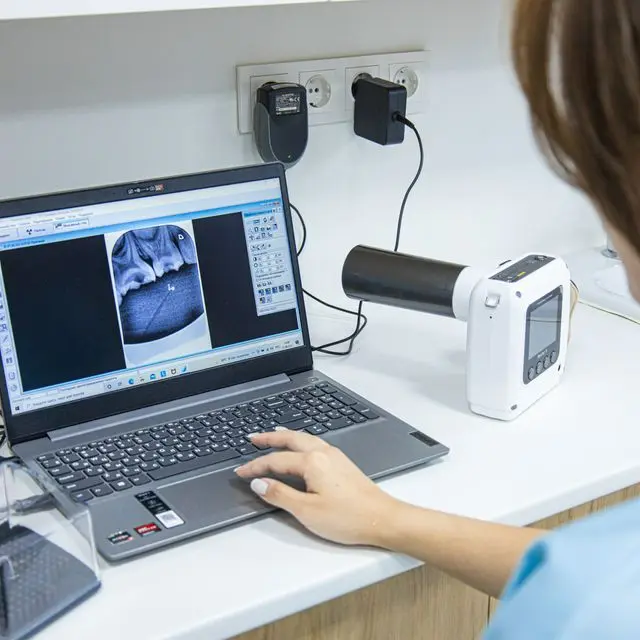
Our certified technical team manages the complex decommissioning and precise reinstallation of your delicate laboratory apparatus. We treat every asset with absolute care, ensuring that delicate electronics and mechanical configurations are perfectly preserved during transit.
We operate under strict compliance and safety management protocols to safely handle controlled environments and high-value tools. From complete risk assessments to secure execution, we eliminate operational liability and protect your vital scientific workspace.
Cold storage is where lab moves most often fail, and the failure is usually invisible until much later. A minus eighty freezer that warms for two hours may look entirely normal and have compromised everything inside it.
The planning questions are specific. How long can each unit tolerate being unpowered? Is there backup power at both ends, and is it tested rather than assumed? Is dry ice or a temporary unit required for the transfer? Who is monitoring temperature during transit, and what is the escalation route if a threshold is breached?
Contents and hardware are separate decisions. Moving a freezer full is faster but concentrates the entire risk into one unpowered journey. Transferring contents to a temporary unit first is slower, adds handling, and removes the single point of failure. Which is right depends on the value and replaceability of what is inside, and that is a conversation with your scientists rather than with a logistics team.
Irreplaceable material deserves a blunt question before anything is planned: if this consignment were lost, what would that mean? Where the answer is that years of work disappear, the answer is usually a specialist cold chain provider rather than any general mover, and we will say so.
When your laboratory move is handled by specialists, everything changes. No uncertainty, no unnecessary delays, and no risk to critical equipment. We ensure your assets are protected and your operations resume as quickly as possible.
Sed ut unde omnis iste natus sit volur tatem accus antium laudan tium totam rem aperiam eaque ipsa ab illo inventore veritatis et architecto beatae vitae dicta sunt explicabo.
Laboratory moves sequence differently from offices. In an office the last things out are the desks. In a laboratory the last things out are whatever the science depends on, and the first things in are the services and utilities that make the new space usable.
The new laboratory has to be ready in a stricter sense than a new office does. Power, water, gas, drainage, extract, and fume cupboard commissioning all need to be signed off before equipment arrives, because equipment that cannot be energised or ventilated cannot be tested.
Requalification is the step most often left out of the programme. Instruments that have moved frequently require reinstallation checks and performance verification before results are considered valid again. That takes time, sits with the manufacturer or your quality team, and needs to happen before the laboratory is declared operational rather than after.
We plan our work backwards from the date you need to be running, not forwards from the date you want to start packing. The two produce very different schedules.
We provide complete laboratory relocation support, designed to reduce risk and keep your move efficient from start to finish.
Every relocation begins with a detailed plan tailored to your laboratory and timelines.
Your equipment is managed by trained professionals with experience in lab environments.
We use secure methods to protect sensitive and high value equipment in transit.
We reinstall and position everything accurately so your lab is ready to operate.
Our process is designed to reduce downtime and keep your operations moving.
We remain available to support you before, during, and after your relocation.
A large share of a laboratory move is not ours, and pretending otherwise would create exactly the gaps we are trying to prevent.
We do not transport chemicals, reagents, or hazardous substances. We do not move biological samples or provide validated cold chain transport. We do not decommission, transport, or recommission calibrated or warrantied instruments, and we do not carry out requalification.
We also do not disconnect or install fume cupboards, benching, or laboratory services. Those are mechanical and electrical works.
What we do is everything else, and coordinate the programme around the specialists so the pieces meet in the right order. If your requirement is primarily the specialist categories above, you need those providers first and a mover second. For laboratory moves inside a healthcare estate, see hospital relocation.
Questions we are asked most often by lab managers and facilities teams.
The move itself is usually days. The programme around it runs to months, because decontamination, manufacturer scheduling, services commissioning at the new site, and requalification afterwards all have their own lead times and mostly cannot be compressed.
No. Chemicals and hazardous substances move under carriage regulations with a licensed carrier, and your lab manages the COSHH side. We sequence around that work having been completed.
They are planned individually. Tolerance to being unpowered, backup power at both ends, whether contents transfer to a temporary unit, and temperature monitoring in transit are all decided before the date is set. Irreplaceable contents usually justify a specialist cold chain provider.
Yes, and certified as such before handling. It is your laboratory’s responsibility, it takes time, and it belongs in the programme rather than being discovered on the day.
Usually. Instruments that have moved generally require reinstallation checks and performance verification before results are treated as valid. Build that time in before you declare the lab operational.
Ensure your laboratory relocation is handled by experts who understand every detail.
Every move starts with a survey. Book yours.
Book A Survey