
A warehouse relocation is not a bigger version of an office move. The unit of work isn’t desks and filing cabinets, it’s racking bays, stock keeping units, and a loading bay schedule that can’t slip without a customer noticing. Get the sequencing wrong and the cost isn’t a delayed start date, it’s missed orders.
This is what a warehouse relocation actually involves: racking dismantle and recommission to HSE and SEMA standards, a stock strategy that keeps your warehouse management system accurate through the move, and a site logistics plan built around loading bay access rather than desk layouts. It sits alongside general commercial relocation work, but the constraints are different enough that it needs its own plan.
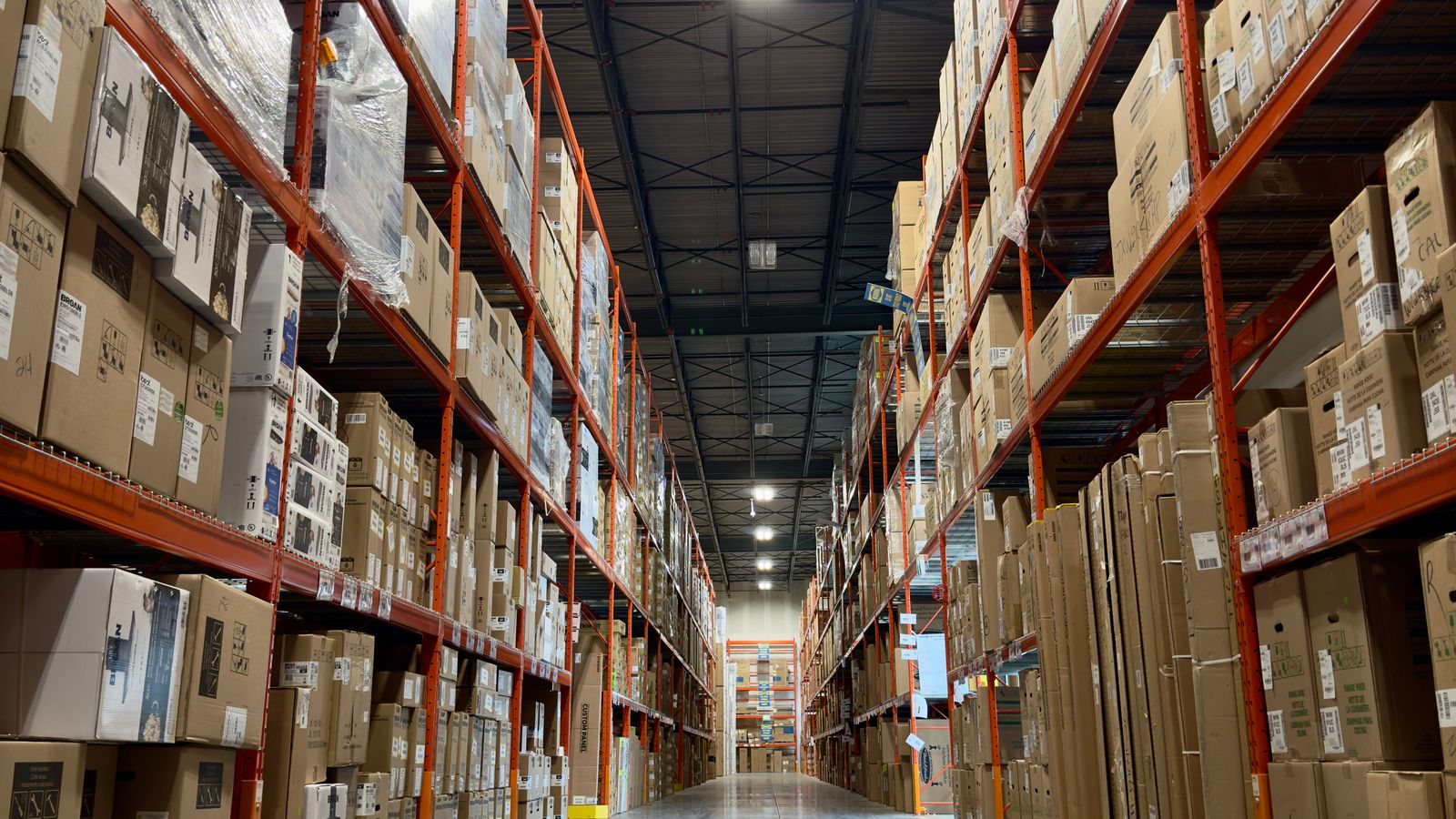
Why a Warehouse Move Isn’t an Office Move With More Space
An office relocation is largely a people and furniture problem. A warehouse relocation is a systems and structure problem: racking has to be dismantled, transported and rebuilt to the same safety standard it left at, stock has to stay traceable through the move so nothing goes missing from the system even if it’s sitting in a van, and none of it can be allowed to stop outbound orders for longer than the business can absorb.
Racking is structural, not furniture
A desk gets carried out and carried back in. Racking is an engineered structure with a rated load capacity, and taking it down and putting it back up is closer to construction work than removals. Under the Provision and Use of Work Equipment Regulations 1998 (PUWER), racking counts as work equipment, which means it has to be suitable for its use, properly maintained, and inspected by a competent person. That obligation doesn’t pause during a move. If anything, a relocation is exactly when installation errors creep in, because racking is being rebuilt from scratch rather than simply maintained in place.
Stock accuracy is the real risk, not stock damage
Damaged stock is annoying. Stock that’s physically fine but has fallen out of sync with the warehouse management system is a bigger problem, because it corrupts fulfilment accuracy in a way that isn’t obvious until an order fails. A relocation plan needs a defined point where stock counts are frozen, a method for tracking anything in transit between sites, and a reconciliation step before the new site goes live for picking.
Loading bay access decides the whole schedule
An office move works around lift capacity and staircases. A warehouse move works around HGV access, yard space for turning and staging, and how many loading bays can run in parallel without vehicles queuing on the road outside. Get this wrong and the bottleneck isn’t the removal team, it’s a line of trucks with nowhere to unload.
Planning a Warehouse Relocation: The Timeline That Actually Works
Warehouse relocations need longer lead times than most businesses expect, mainly because racking design, stock strategy and loading bay logistics all have to be settled before a moving date can be fixed, not worked out afterwards.
8-12 weeks out: racking design and site survey
Confirm the new site’s racking layout against the existing configuration. It’s rarely a direct copy: different bay dimensions, column spacing, or ceiling height usually mean at least partial redesign rather than a straight dismantle-and-rebuild. This is also when to check the new site’s loading bay count and yard access against what the operation actually needs on a busy day, not an average one.
4-6 weeks out: stock strategy and WMS coordination
Decide whether this is a phased move, section by section with both sites live in parallel for a period, or a single cutover with a defined downtime window. Phased moves protect continuity better but take longer and cost more in duplicated racking and handling. A single cutover is faster and cheaper but means accepting a fulfilment gap, so it needs a clear customer communication plan for that window.
2 weeks out: final confirmations
Lock the racking installer’s schedule, confirm HGV access and any road closures or parking suspensions needed at both sites, and finalise the stock freeze date and reconciliation method with the WMS provider or in-house system owner.
Moving week
Dismantle and racking removal typically runs ahead of stock transfer so the new site is ready to receive before the first pallet arrives. Racking is rebuilt and signed off by a competent person before it’s loaded, not after.
Racking: Dismantle, Transport and Recommission
Racking dismantle and reinstallation should be treated as a specialist workstream, not folded into general removals. The HSE’s HSG76 guidance on warehousing and storage sets out the standard most UK warehouses are expected to work to, and it explicitly covers racking installation and inspection alongside manual handling and site transport.
In practice, this means: racking is installed by competent persons following the manufacturer’s instructions, load notices are fitted and legible before the racking goes back into use, and a visual inspection happens before the first pallet goes up, not weeks later once the site is already operating. The Storage Equipment Manufacturers’ Association (SEMA) trains and accredits racking inspectors, and using an accredited inspector for the post-installation check is a straightforward way to demonstrate that due diligence.
Where racking has any history of damage or repair, a relocation is the point to flag it rather than move it as-is and hope. Reassembling damaged racking at a new site and discovering the problem after go-live is a far more disruptive fix than addressing it during the dismantle.
Stock and Inventory: Keeping the System Accurate Through the Move
The single biggest operational risk in a warehouse relocation isn’t breakage, it’s the warehouse management system losing sync with physical reality. A pallet that’s correctly logged but sitting in the wrong location, or in transit between two sites, behaves exactly like a stock error to anyone trying to pick against it.
Phased move vs single cutover
A phased move, transferring stock and racking section by section while both sites operate, keeps fulfilment running but roughly doubles the coordination overhead and usually means renting racking or space at both sites simultaneously for a period. A single cutover is simpler to execute but needs an agreed downtime window, ideally scheduled around your lowest order volume period rather than treated as a rounding error.
Freeze, track, reconcile
Set a hard stock freeze point before transfer begins. Anything moved after that point needs to be trackable, whether that’s a manual log or a WMS module that handles in-transit stock as its own status rather than simply removing it from the old location. Reconcile counts at the new site before picking resumes, not after the first customer complaint about a missing item.
Where storage needs shift during the transition, whether that’s overflow stock, seasonal buffer, or a staging period between sites, flexible warehouse space arranged for the move itself is usually more cost-effective than committing to permanent extra capacity you won’t need once the relocation is complete.
When Flexible Warehouse Space Solves the Problem Instead
Not every warehouse relocation is really about moving to a new permanent site. Sometimes the actual problem is a temporary capacity gap, and short-term flexible warehouse space solves it without the cost and disruption of a full relocation.
This comes up in a few recurring situations: a seasonal peak that needs extra pallet positions for eight weeks a year rather than eight weeks plus fifty-two more of paying for space you don’t need, a lease ending on the current site with the next permanent location not yet ready, or a business testing a new region before committing to a long lease there. In all three cases, flexible short-term warehouse space bridges the gap without locking the business into commitments sized for a temporary situation.
The trade-off is straightforward: flexible space costs more per pallet position per month than a long lease, but it removes the fixed-cost risk of paying for capacity that sits empty most of the year. For a business genuinely unsure whether a demand spike is permanent, that flexibility is usually worth more than the per-position saving on a long-term commitment.
Choosing a Warehouse Relocation Partner
The most common mistake is treating a warehouse move as a bigger version of an office removal and booking a general moving company without racking expertise. Ask specifically whether racking work is done in-house or subcontracted, what insurance covers stock value rather than just the physical racking, and whether the provider can work out-of-hours or over a weekend to protect a live fulfilment operation.
Worth confirming directly: who signs off the racking installation and to what standard, how stock discrepancies are handled if they’re found during the move, and what happens if the schedule slips, since a warehouse relocation running late has knock-on costs an office move simply doesn’t.
Frequently Asked Questions
How long does a warehouse relocation take to plan?
Most warehouse relocations need 8 to 12 weeks of lead time at minimum, longer if racking needs redesigning for a different site layout or if the move involves a phased transfer to protect fulfilment. Rushed warehouse moves are where racking installation errors and stock discrepancies tend to originate.
Can a warehouse keep operating during a relocation?
Yes, with a phased approach: moving section by section while both sites remain live for an overlap period. It costs more in duplicated space and coordination than a single cutover, but it avoids a full fulfilment stoppage.
Who is legally responsible for racking safety after a move?
The operator of the warehouse. Under PUWER 1998, racking must be suitable, properly maintained, and inspected by a competent person, and that responsibility doesn’t transfer to whoever did the physical installation. A signed-off inspection after reassembly is how that responsibility gets discharged.
What’s the difference between warehouse relocation and flexible warehouse space?
A relocation moves an operation permanently from one site to another. Flexible warehouse space is short-term capacity, rented for weeks or months to cover a seasonal peak, a gap between leases, or a period of uncertainty, without committing to a permanent move at all.
How is stock tracked during a warehouse move?
By setting a stock freeze point before transfer, tracking anything moved after that point as its own in-transit status rather than simply removing it from the system, and reconciling full counts at the new site before picking resumes.
Does racking need to be inspected after every relocation?
Yes. HSE guidance (HSG76) expects a visual inspection before racking returns to use and treats installation as a point where errors are most likely to occur. A SEMA-accredited inspector is the standard route to demonstrating that check was done properly.